Burst Pipe Water Damage in Fulshear, TX: What to Do First
A burst pipe, water heater or supply line can send water through your Fulshear home's ceilings and walls, and where it started determines what to shut off and who to call.
Who to Call First in FulshearWhere the Water Came From
In a two-story Fulshear home, water from a broken pipe, a failed water heater, or a supply line does not stay where it started — it runs down through insulation, ceilings, and walls before it reaches the floor. Where the water started decides which shutoff to use, what gets wet, and what to tell your insurer.
- An upstairs supply line or fixture — sink, toilet, or ice maker
- A water heater in the attic or garage
- A washing machine or refrigerator supply line
- A pipe frozen inside an exterior wall or attic during a hard freeze
Upstairs Supply Line or Fixture
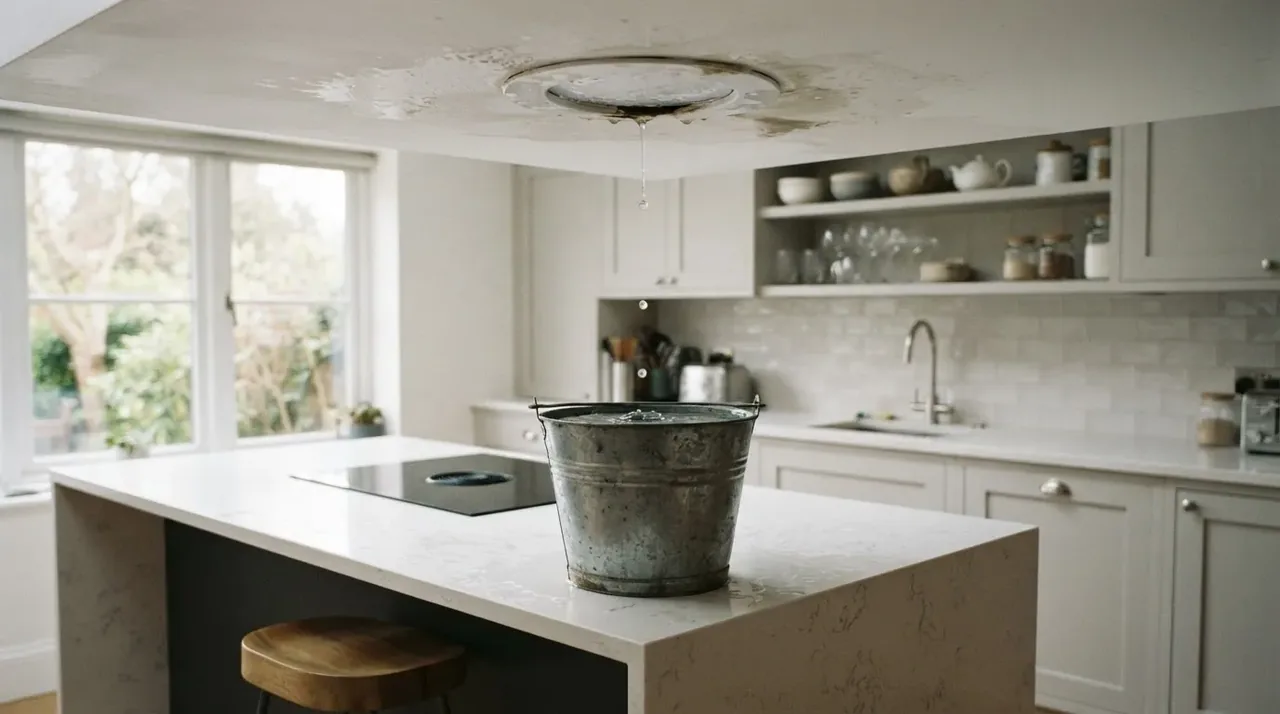
Shut off the water to that fixture, or the home's main shut-off valve if you can reach it safely. Do not force a valve you cannot operate; seek qualified help instead. Water from an upstairs fixture usually soaks the subfloor, then the ceiling and insulation below, sometimes well away from where the leak started. Tell your insurer the fixture, roughly when you found it, and every room that got wet.
Attic or Garage Water Heater
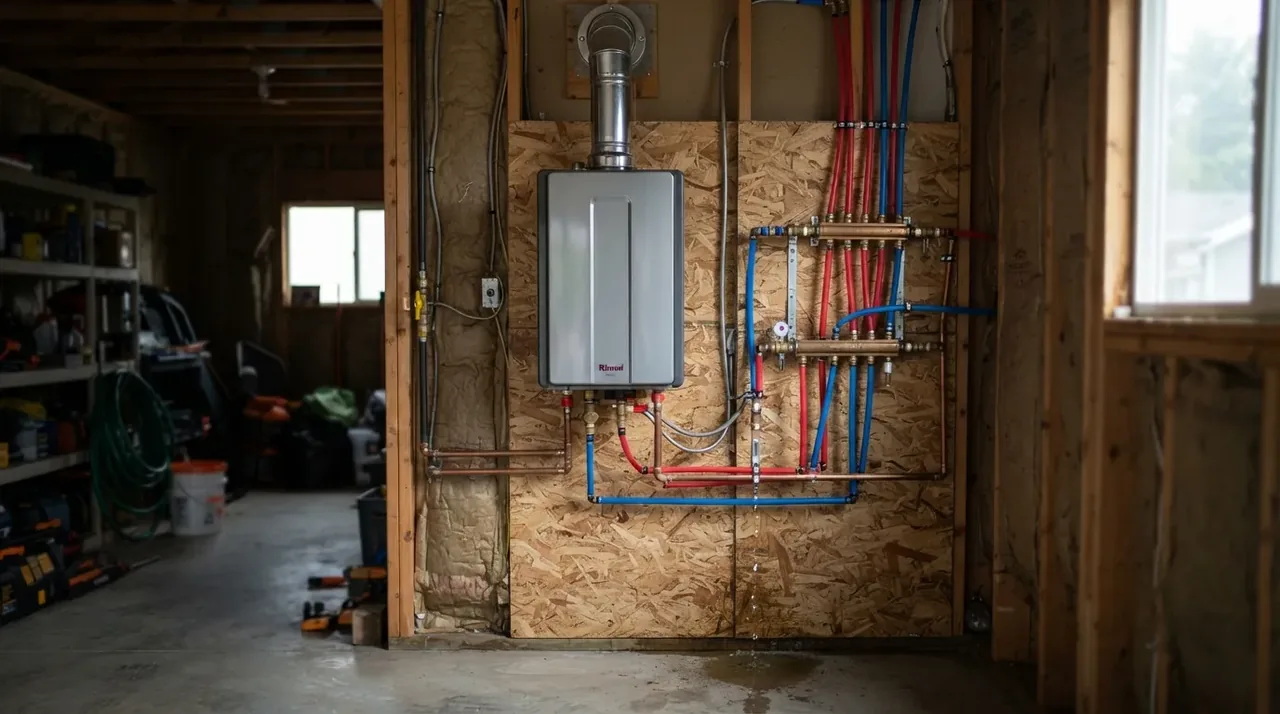
Shut off the water to the water heater, or the home's main shut-off valve if you can reach it safely. An attic failure sends water through the ceiling and walls below, often reaching more than one room. A garage failure usually stays lower, soaking the floor and sometimes an adjoining wall.
FEMA/Ready.gov: do not enter a home where you smell gas, notice structural damage, downed wiring, or suspected contamination.
Washing Machine or Refrigerator Supply Line
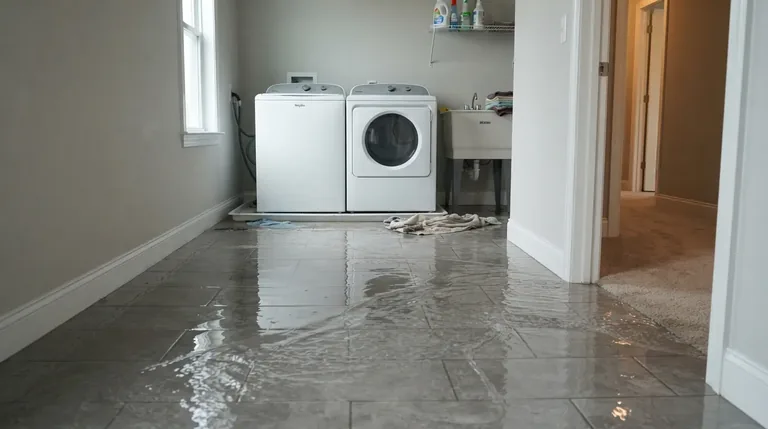
These appliances run on a small supply line that can fail. Shut off the water to that appliance, or the home's main shut-off valve if you can reach it safely. This leak usually stays on one floor, soaking flooring and cabinets near the connection, and can travel under a slab into the next room.
- Note which appliance and supply line failed
- Photograph the line and connection before you move or discard anything
Frozen Pipe in an Exterior Wall or Attic
A pipe that freezes and splits inside an exterior wall or attic often does not leak until it thaws. Shut off the water to the home's main valve if you can reach it safely, since a frozen pipe is hard to isolate to one fixture. A frozen attic pipe behaves like an upstairs leak; one in an exterior wall usually shows up as a wet baseboard or a bulging wall low to the floor.
Freeze damage often shows up only after the ice thaws, not during the freeze itself — a wall that looked fine during a cold snap can still turn out to be leaking.
Who to Call If You Cannot Stop the Water
If you cannot stop the flow at a fixture or the main shutoff, or the problem is in the line coming into the house, call your water provider right away. Which number you call depends on whether the City of Fulshear or a municipal utility district serves your address.
- City of Fulshear water customers: call the City of Fulshear 24 Hour Emergency Services line at 281-346-8830.
- Municipal utility district (MUD) customers: many newer Fulshear subdivisions are served by a MUD rather than the city, so call the operator number printed on your water bill.
- Any immediate life-safety hazard, such as active flooding near an electrical panel: call 911 first.
You can confirm current numbers on the City of Fulshear's water utilities page.
For a fuller breakdown of which utility serves your address and where the nearest flood zone sits, see who to call first if your Fulshear home is flooding.
Who Fixes What
A pipe or water heater leak usually needs two different kinds of help: someone to fix the plumbing, and someone to remove standing water and dry the structure before mold sets in. In Texas, these are two separate, separately regulated trades, and a Fulshear homeowner may need both.
| Job | Who Does It | Regulated By |
|---|---|---|
| Repairing the pipe, valve, water heater, or supply line | A plumber | Texas State Board of Plumbing Examiners |
| Removing standing water and drying the structure | A restoration provider | General water removal has no separate state license; mold remediation work is licensed through TDLR |
| Repairing wiring, outlets, or HVAC equipment that got wet | An electrician or HVAC contractor | Texas Department of Licensing and Regulation |
Ask any contractor for proof of insurance and any trade license the job requires. Texas licenses the trades involved — plumbers through the Texas State Board of Plumbing Examiners, electricians and HVAC contractors through TDLR — and mold remediation companies through TDLR.
If wall cavities or subflooring stayed wet, ask the provider how it checks for hidden moisture — see how mold develops after water damage in Fulshear. For more on handling water damage in your home, see the water damage restoration overview for Fulshear.
Will Insurance Cover This Repair?
Most standard homeowners policies in Texas typically cover a sudden, accidental water discharge — like a pipe that bursts without warning — but typically exclude a leak that ran slowly over time. This is general information, not legal or insurance advice; read your policy and ask your adjuster how it applies.
- Typically covered: a pipe, supply line, or water heater that suddenly bursts or discharges water
- Typically excluded: a slow leak, ongoing seepage, or long-term moisture behind a wall
- Mold itself is usually excluded, except for repair tied to an otherwise-covered water loss
These distinctions come from TDI's consumer guide on homeowners coverage. If your insurer is slow to act, Texas Insurance Code Chapter 542 sets hard deadlines, summarized below with section numbers.
| Insurer's Step | Deadline | Statute Section | Verified |
|---|---|---|---|
| Acknowledge your claim and start investigating | By the 15th calendar day after claim notice (30th business day for an eligible surplus lines insurer) | Sec. 542.055(a) | Checked: September 2026 |
| Accept or reject your claim in writing | By the 15th business day after the insurer receives all items required to secure final proof of loss | Sec. 542.056(a) | Checked: September 2026 |
| If more time is needed, explain why, then decide | By the 45th day after that notice | Sec. 542.056(d) | Checked: September 2026 |
| Pay the claim | By the 5th business day after the insurer notifies you it will pay the claim | Sec. 542.057(a) | Checked: September 2026 |
| After a weather-related catastrophe or major natural disaster, as defined by the commissioner | Add 15 days to every deadline above | Sec. 542.059(b) | Checked: September 2026 |
If your insurer misses a deadline, file a complaint with TDI at 800-252-3439 (8 a.m.-5 p.m. Central, Monday-Friday) or through TDI's online complaint process.
You are not required to hire a public adjuster. If you do, Insurance Code Chapter 4102 caps the fee at 10 percent of the settlement, requires a state license, and bars any percentage fee if the insurer pays, or commits in writing to pay, the policy limit within 72 hours of the loss report — ask to see the adjuster's license before signing anything.
If your home is still under a builder warranty, ask the builder what it covers.
If you rent your Fulshear home, tell your landlord about the leak in writing right away. A renters policy typically covers your belongings, not the building itself — that is the property owner's responsibility.
Mold Watch After a Pipe or Water Heater Leak
Wet drywall, insulation, and flooring do not need to sit for long before mold becomes a real possibility. FEMA says wet materials can develop mold within 24-48 hours, and the EPA says mold generally will not grow if wet or damp items are dried within that same window.
- The CDC advises drying fully and quickly within 24-48 hours after a flood
- Remove wet materials as soon as it is safe to do so
FEMA/Ready.gov: people with asthma, lung disease, or immune suppression should not enter buildings with visible or suspected mold.
For mold remediation licensing in Texas and how insurance sublimits for mold work, see mold remediation and insurance coverage in Fulshear.
If That Did Not Work
Sometimes the first call does not solve it — a line is busy, a shutoff will not fully close, or water keeps coming back. Here is what to try next, and when to treat this as bigger than a plumbing repair.
- Try again: if the city's emergency line does not pick up, call back — lines can be busy during storms or cold snaps, and a second call is normal.
- Try another route: if your MUD's number does not answer, check the bill for an after-hours contact, or check the operator's website.
- Escalate: if the water will not stop and there is a real safety risk, such as flooding near an electrical panel, call 911 rather than waiting on a callback.
If the damage spread beyond the immediate leak, into a hallway, a downstairs ceiling, or more than one room, the complete Fulshear water damage restoration guide walks through the next steps in order.
What Changed on This Page
- September 2026: page published; phone numbers and legal deadlines checked against the official sources linked above.
Frequently Asked Questions
Does homeowners insurance cover a burst pipe in Fulshear?
How fast can mold start after a pipe or water heater leak?
Do I need to hire a public adjuster?
Who repairs the plumbing, and who dries out the house?
Who do I call first if I'm on city water versus a MUD in Fulshear?
Is flood insurance the same as coverage for a pipe that bursts?
Water in your home right now?
See who to call first in Fulshear, how to reach your water provider, and how to check your flood zone.
Who to Call First in Fulshear